

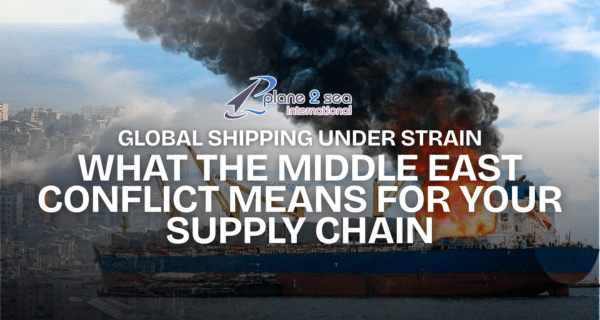
The global logistics landscape is once again facing a major disruption — this time linked to the escalation of the conflict involving Iran and strikes by US and Israeli forces. While geopolitical events are not new to supply chains, the current situation has rapidly moved from a regional concern to one with tangible implications for freight, routing, costs, and planning.
Here’s what you need to know and how it could affect your freight operations in the weeks ahead.
1. Strategic Chokepoints Disrupted — Strait of Hormuz Under Risk
The Strait of Hormuz is one of the most pivotal trade arteries in the world. Nearly 20% of global oil supplies and a substantial volume of LNG and cargo flows through this narrow waterway between the Persian Gulf and the Gulf of Oman. Recent military actions in the region have created serious operational risks:
- Major carriers, including Maersk, have suspended transits through the Strait of Hormuz, citing safety concerns for crews and vessels.
- Vessel traffic has reportedly dropped sharply, with real-time data showing steep fall-offs as owners avoid the corridor.
- Reports indicate more than 150 crude and LNG tankers and around 170 containerships are stalled or rerouting.
While there may not be a formal legal closure in place, war-risk warnings and commercial advisories have effectively limited normal operations through this chokepoint.
2. Air Freight Routes Tighten — Rates on the Rise
The conflict is also reshaping air logistics:
- Several Middle Eastern airspaces have been closed or restricted due to safety concerns, forcing carriers to reroute flights around the region.
- Airlines are grounding aircraft or adjusting their operations, leading to anticipated spikes in air freight rates.
With traditional cargo hubs like Dubai facing operational uncertainty or suspension, global aviation logistics networks may see tighter capacity and higher fuel surcharges as flights detour significant distances to avoid conflict zones.
3. Ocean Freight Services Adjust and Reroute
As risk levels increase:
- Ocean carriers are adjusting services to prioritise safety, often rerouting vessels around Africa’s Cape of Good Hope rather than transit through the Middle East.
- These reroutings add days — sometimes weeks — to transit times and create capacity strain on alternate routes.
This trend is compounded by broader Red Sea risk pressures, pushing carriers to reconsider routes that were already stretched due to Houthi activity in earlier years.
4. Rising Costs — Freight, Insurance, and Risk Premiums
The cost implications are already manifesting:
- Tanker freight rates from the Gulf to China, Europe, and other regions have spiked dramatically — in some cases more than 35% in a single assessment period.
- War-risk insurance premiums have elevated sharply, sometimes 60% or more compared with recent levels.
- Some insurers have even withdrawn coverage entirely for vessels entering the Gulf, citing unacceptable risk.
Higher insurance costs tend to be passed down the supply chain, contributing to rising freight charges, surcharges on bookings, and greater unpredictability for businesses managing import and export freight.
5. Broader Ripple Effects — Trade, Energy, and Beyond
The consequences don’t stop at logistics:
- Oil prices have surged, crossing new multi-month highs — with Brent crude above US$80 per barrel in recent trading — as flows through the Hormuz corridor tense.
- Disruptions in Gulf routes could push both energy and freight costs higher, feeding inflationary pressures globally.
For sectors dependent on just-in-time inventory, this combination of freight volatility and energy cost pressure could lead to broader production delays and margin compression.
What This Means for Shippers Today
- Plan earlier than usual: With transit times and capacity under pressure, forward planning becomes even more critical.
- Expect cost volatility: Prepare for next-month freight and insurance costs to reflect ongoing risk premiums.
- Review routing alternatives: Consider diversifying routing strategies through alternative sea lanes, inland corridors, or multimodal solutions where viable.
- Stay informed: Situation changes quickly — real-time data and expert support matter more than ever.
How plane 2 sea Can Support Your Business
In times of uncertainty, a logistics partner who stays involved, informed, and proactive becomes invaluable. At plane 2 sea, we’re closely monitoring these developments and assisting clients with:
- Scenario planning for peak season disruptions
- Strategic routing and cost evaluation
- Clear communication throughout the freight lifecycle
- Risk analysis and tailored contingency options
If your upcoming shipments could be affected by Middle East disruptions — or if you simply want to understand your options — we’d be happy to talk through it with you.
Phone : 0418 888 594
Email : carolina@plane2sea.com.au
Website : www.plane2sea.com.au