

If you read our last newsletter, you now know what the Brown Marmorated Stink Bug is, why Australian biosecurity authorities take it so seriously, and what the seasonal measure means for importers in general.
But here is the question that actually matters for your business right now.
Does it apply to YOUR shipment?
That is what this newsletter is designed to help you work out. Because the BMSB seasonal measure does not apply to every importer equally. It depends on where your goods are coming from, what type of goods they are, and when they are arriving in Australia.
The 2026/2027 season runs from 1 September 2026 to 30 April 2027. If you have shipments planned during this window, here is exactly what you need to check.
STEP 1: IS YOUR COUNTRY OF ORIGIN ON THE HIGH-RISK LIST?
The first thing to check is where your goods are coming from. BMSB measures apply to goods imported from countries where BMSB is known to be present, established, or spreading.
For the 2026/2027 season, the high-risk and target-risk countries include:
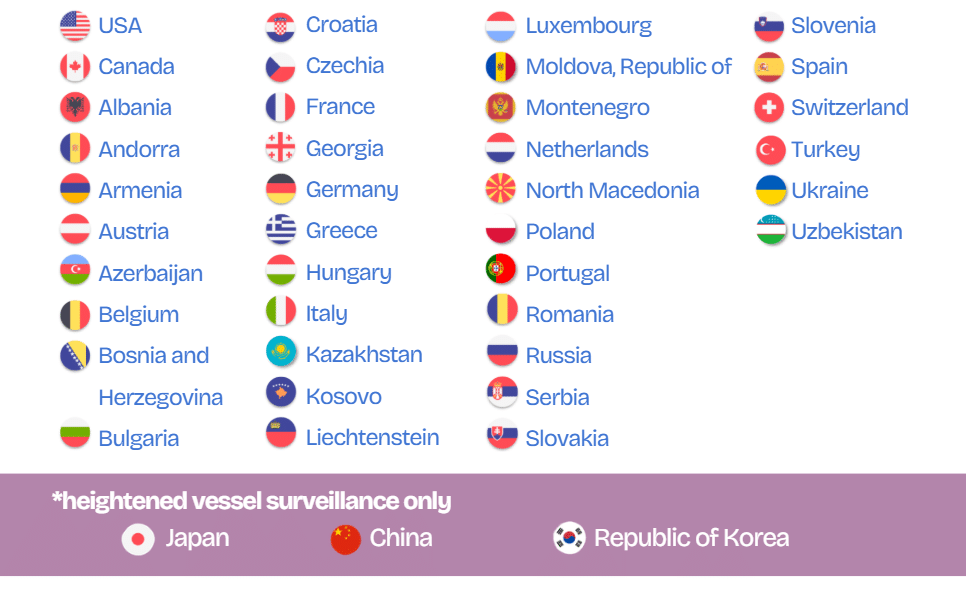
Countries and commodities affected | plane 2 sea International 2026
USA, Canada, Albania, Andorra, Armenia, Austria, Azerbaijan, Belgium, Bosnia and Herzegovina, Bulgaria, Croatia, Czechia, France, Georgia, Germany, Greece, Hungary, Italy, Kazakhstan, Kosovo, Liechtenstein, Luxembourg, Moldova, Montenegro, Netherlands, North Macedonia, Poland, Portugal, Romania, Russia, Serbia, Slovakia, Slovenia, Spain, Switzerland, Turkey, Ukraine and Uzbekistan.
In addition, Japan, China, and the Republic of Korea are subject to heightened vessel surveillance only.
If your goods are coming from any country on this list, move to Step 2.
If your country of origin is not on this list, your cargo is unlikely to be subject to BMSB seasonal measures, but we always recommend confirming with your freight forwarder as the list is reviewed and updated by DAFF each season.
STEP 2: IS YOUR CARGO IN A HIGH-RISK COMMODITY CATEGORY?
Not all goods from high-risk countries are treated equally. The BMSB seasonal measure focuses on commodity categories that are most likely to harbour the pest due to their nature, packaging, or manufacturing environment.
High-risk commodities include:
- Vehicles, engines and machinery
- Metal and stone products
- Electronics, furniture and whitegoods
- Agricultural and construction equipment
If your goods fall into one of these categories and are coming from a high-risk country, there is a very strong likelihood that BMSB seasonal requirements will apply to your shipment.
If you are unsure whether your specific product falls within a high-risk commodity category, do not guess. This is exactly the kind of question our team deals with every day and we can check it for you quickly.
STEP 3: IS YOUR CARGO ARRIVING BETWEEN 1 SEPTEMBER 2026 AND 30 APRIL 2027?
Timing is everything with BMSB. The seasonal measure only applies to goods arriving in Australia during the active season window.
If your cargo is arriving before 1 September 2026 or after 30 April 2027, the current seasonal measure does not apply.
source: sevenseasworldwide.com
However, if your goods are arriving during the season window and you answered yes to Steps 1 and 2, your shipment is at risk and you need to act before your goods leave the country of origin.
This is the critical point most importers miss. Treatment and compliance requirements for BMSB must be arranged offshore before the goods ship. Once your cargo is on the water, your options narrow significantly and the costs increase.
WHY IT MATTERS TO YOU: THE THREE THINGS BMSB COMPLIANCE REQUIRES
If your shipment is subject to the seasonal measure, here is what that actually means in practice:
Mandatory treatment for certain goods. Depending on your cargo category and country of origin, your goods may need to be treated by an approved provider before they leave the origin country. Treatment methods include methyl bromide fumigation, heat treatment, or other approved methods depending on the goods.
Pre-shipment requirements. Treatment must be completed and certified before the goods are loaded. Your supplier needs to work with a DAFF-approved treatment provider, and the certificate must accompany your shipment documentation.
Increased inspections and hold risks on arrival. Even with correct treatment, goods from high-risk countries may be subject to inspection by Australian biosecurity officers on arrival. If BMSB or evidence of BMSB is detected, the cargo can be held, re-treated at your cost, or refused entry.
WHAT HAPPENS IF YOU IGNORE BMSB REQUIREMENTS?
We want to be direct about this because the consequences are real and we have seen them affect businesses that simply did not know soon enough.
Ignoring or delaying your compliance plan can lead to:
- Emergency fumigation arranged at the border at your cost and at a significantly higher price than offshore treatment
- Goods detained or refused entry into Australia
- Supply chain disruptions and unexpected storage costs while cargo sits at port
- Missed delivery deadlines that flow through to your clients
- Lost client trust that is very hard to recover
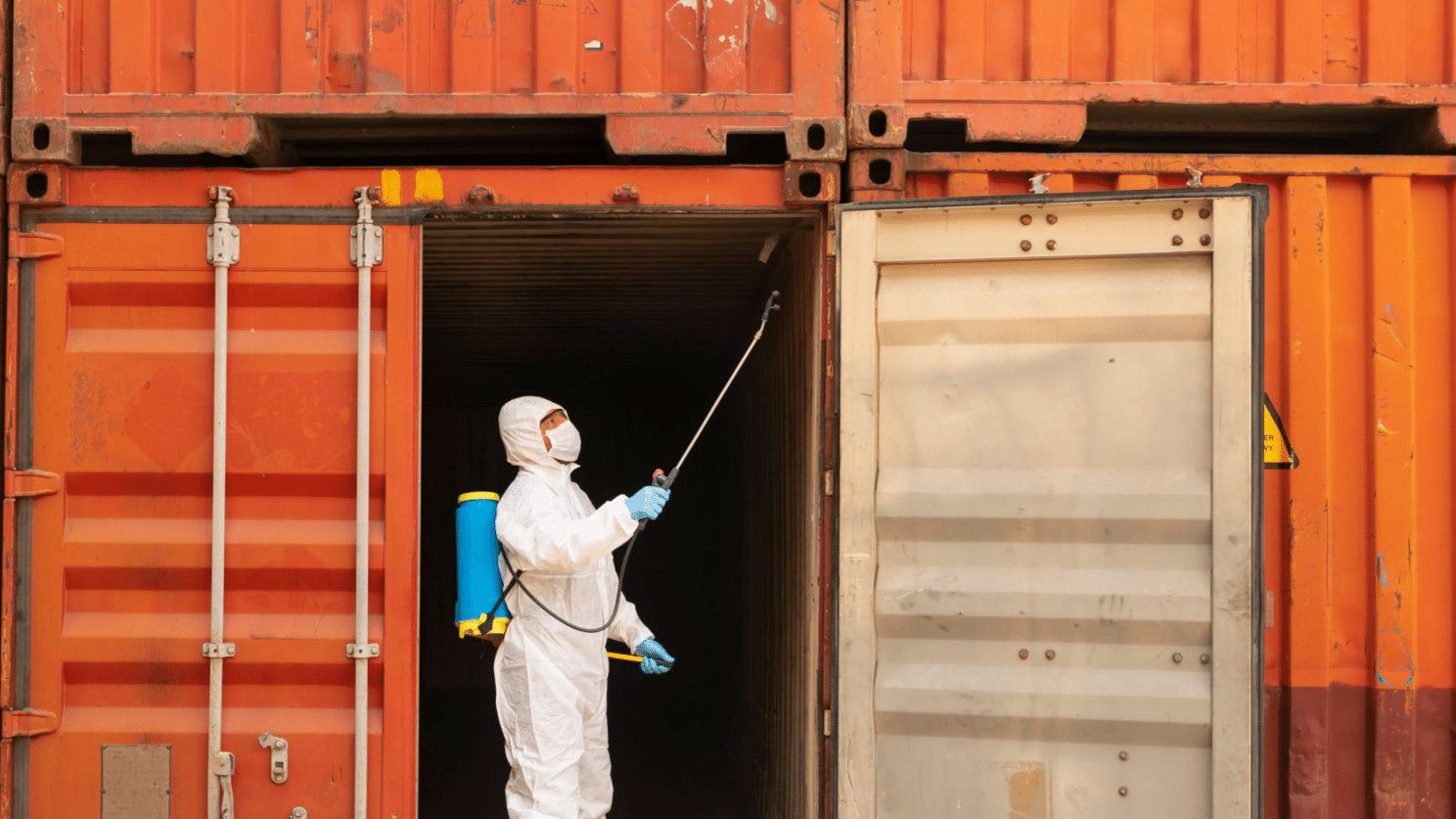
source: Greater Pest Control | Dec 07, 2024
BMSB compliance is not something to leave to chance. And it is not something to sort out once your goods are already on the water.
THE plane 2 sea APPROACH TO BMSB SEASON
At plane 2 sea, we support importers through BMSB season with a proactive planning approach that takes the guesswork and stress out of the process entirely.

Carolina & Anthony | plane 2 sea International 2026
Here is how we do it:
Confirm if your shipment is at risk. We review your cargo details, country of origin, and arrival window and give you a clear answer on whether BMSB requirements apply.
Coordinate offshore treatment with certified providers. If treatment is required, we connect your supplier with DAFF-approved treatment providers in the country of origin and manage the coordination so nothing falls through the cracks.
Manage permits, declarations, and documentation. We handle the paperwork so your treatment certificates are correct, complete, and accompanying your shipment from day one.
Monitor clearance progress in real time. We track your cargo through the biosecurity clearance process so you always know where things stand and there are no surprises on arrival.
Prevent bottlenecks by planning ahead. The earlier we start, the smoother it goes. We work with importers well before September so that by the time the season starts, everything is already in place.
Our approach is about clarity, confidence, and control. Whether this is your first BMSB season or your fifth, we make the process smooth.
YOUR BMSB SELF-ASSESSMENT CHECKLIST
Before you speak to your freight forwarder, run through these three questions:
- Is my country of origin on the BMSB high-risk or target-risk list?
- Is my product category listed as a high-risk commodity?
- Is my cargo arriving in Australia between 1 September 2026 and 30 April 2027?
If you answered yes to all three, your shipment is at risk and you need to start the conversation now.
If you are unsure about any of them, that is exactly what we are here for.
GET IN TOUCH BEFORE SEPTEMBER
The 2026/2027 BMSB season starts 1 September 2026. The time to prepare is now, not when your cargo is already on the water.
Our team is available 24/7 to help you assess your risk, plan your compliance, and make sure your imports keep moving smoothly through the season.
Phone : (02) 9525 9922
Email : carolina@plane2sea.com.au
Website : www.plane2sea.com.au
Moving the world 2 you.
#plane2sea #BMSB #Biosecurity #ImportCompliance #FreightForwarding #ImportExport #AustralianBiosecurity #SupplyChain #AgricultureProtection